
Is Your Cold Chain Quietly Bleeding Profit?
Cold Storage is Booming, Energy is Punishing, and Waste is Still Haunting Margins—here’s where Automation (and Smarter Racking) Pays Back Faster than you think.
The Squeeze No One Can Ignore:
Global Cold Chain is Exploding in Size—and Competition. Market Value is Projected to Surge from about $316B in 2024 to More than $1.6T by 2033 (yes, 5× Growth), as Perishables, Pharma and E-Grocery Scale Up.
At the same time, Refrigeration Devours the Electricity Bill in Chilled and Frozen Warehouses—Often 70–80% of Total Facility Energy—so Every Cubic Metre you don’t have to cool matters.
Meanwhile, Food Loss Remains Stubborn: ~13.3% of Food is Lost from Post-Harvest to Retail, and Food Loss + Waste Generates 8–10% of Global GHG Emissions. In Produce and Meat, that’s not just a Sustainability Headline—it’s Your P&L.
The 2025 Playbook: Automate the Right Constraints:
Analysts keep coming back to the Same Levers: Space Utilisation, Labour Resilience, Throughput Quality, and Energy Intensity. Warehouse Automation Directly Targets All Four—Especially in the Cold.
1. Space: Store More, Cool Less
High-Density Storage Systems (Mobile Racking, Pallet Shuttle, Multi-Directional Shuttle) Compress Aisles and Push Up Pallet Count—so you Cool Volume that Earns. Case Data from Automated Multi-Directional Shuttles
Reports ~1.8× Storage Density and ~35% Energy Reduction, Largely from Reduced Refrigerated Air Volume and Shorter Door-Open Cycles.
2. Throughput: Faster In/Out, Fewer Touches
Cold Rooms Punish Dwell Time. Deep-Lane Shuttle Systems have shown Double-Digit Efficiency Gains—One Published Case Citing 44% Overall Efficiency Improvement with High-Density Racking & Pallet Shuttles. Expect the Biggest Wins where SKUs Turn Quickly (Inbound Harvest Peaks, Blast-Freezing, Ripening, Cross-Dock).
3. Labour: Insulate Operations from Shortages
Cold Environments Magnify Recruitment and Retention Issues. Automation Cushions Peak-Season Labour Ramps, Improves Ergonomics, and Stabilises Service Levels—Key for Exporters Working in Tight Windows.
4. Quality & Loss: Hold the Cold, Cut the Waste
A Tighter Layout Plus Automated Handling Reduces Temperature Excursions and Handling Damage—Critical when Global Systems still Lose ~13% Pre-Retail and Up to 40% Across the Chain by Some Estimates. Every Avoided Deviation is Shelf-Life—and Revenue.
What to Automate First (Produce & Meat Use-Cases)
-
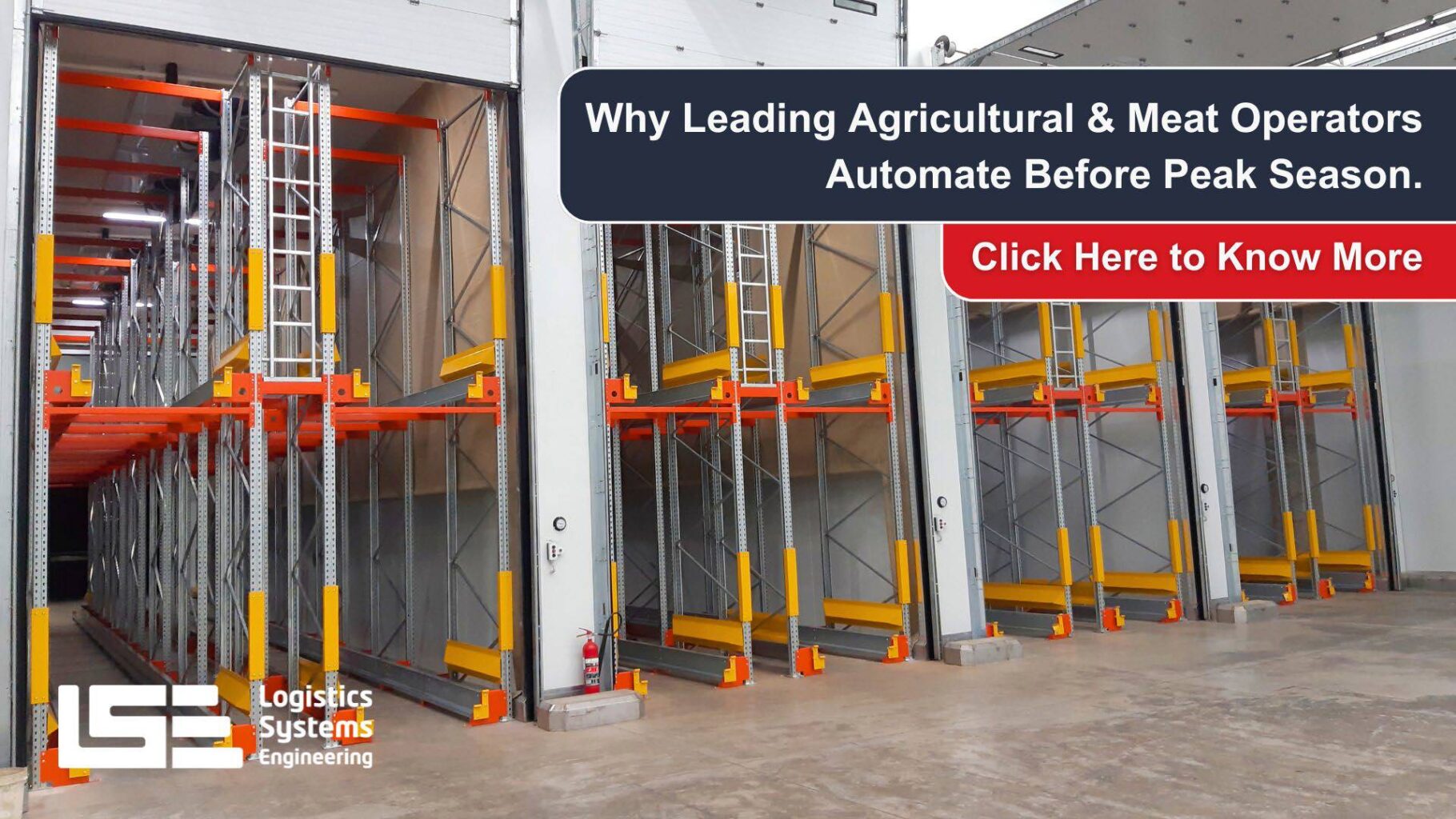
LSE Mobile Pallet Racking System (Freezer/Reefers):
Best when you carry many SKUs with Moderate-to-High Pallet Depth per SKU. Open a Single “Live” Aisle on Demand and Shrink the Cooled Cube—a Direct Energy Lever. Don’t let Ghost Aisles Drain your kWh. -
LSE’s Pallet Shuttle (Deep Lane, High Turnover):
Ideal for Blast-Freezing, Pre-Cooling, Rapid Cooling, Forced Cooling, and Inbound Harvest Surges. Delivers a Step-Change in Pallets/Hour and Storage Density. -
LSE’s Multi-Directional Shuttle (Complex SKUs / Variable Lanes):
Balances Density with Slotting Flexibility, which is Great for Mixed Agricultural Portfolios (Cartons, Crates, Palletised Bins) and Meat Primals vs Cartons, where Seasonality Whipsaws Lane Depth. Logistics Systems Engineering (LSE) will Advise when to Favour Flexibility over Raw Density. -
LSE Sensing & Monitoring Layer:
Add Real-Time Temperature, Door, and Congestion Telemetry. Adoption is Accelerating under Tighter Safety Regulations and Pharma/Vaccine Standards. At LSE, we Integrate Sensors, Dashboards, and Alerts with your Racking Automation.
ROI Signals Senior Leadership, which will result in a Green-Light — with LSE
-
Energy Exposure:
When Refrigeration Accounts for >70% of Your Electricity Spend, LSE’s Density-First Layouts (Mobile Pallet Racking or Deep-Lane Pallet Shuttle Systems) typically Model a Positive Net Present Value (NPV) by Shrinking the Cooled Volume and Reducing Fan/Compressor Run-Time. -
Peak-Season Pressure (Harvest Surges, Dispatch Windows):
LSE’s Pallet Shuttle System Deep Lanes Smooth Flow, Lift Pallets/Hour, and Cut Overtime Dependency. If your SKU Mix is Volatile, LSE’s Multi-Directional Shuttle adds Flexibility while Maintaining High Density. -
Exporter Sensitivity (Shelf-Life & Arrival Temperature):
LSE’s Automation Stabilises Temperatures and Reduces Handling Variability—Lowering Claims and Credit Notes Across Lanes.
Don’t let Inefficiencies Haunt your Warehouse. Empty Air is the Scariest thing you can Pay to Refrigerate.
Let’s Build Your Winning Layout:
Ready to Unlock Capacity, Speed, and Energy Savings before Peak Season?
Fred Albrecht, CEO of Logistics Systems Engineering (LSE), will take the stage as a Keynote Speaker at the Packhouse Innovation & Export Summit 2025, hosted by Empire Conferencing & Training, to Present “Harvesting Fresh Thinking: Automation in Cold Chain Logistics”.
Fred will Explore how Warehouse Automation is Transforming the Agricultural Export Sector — from Streamlining Post-Harvest handling to Reducing Spoilage, Lowering Energy Costs, and Ensuring Product Integrity from Farm to Global Markets.
Logistics Systems Engineering (LSE) is Proud to Announce that we will also be Sponsoring and Exhibiting at the Summit, Showcasing our Commitment to what we “Believe”. Join us as we share Insights, Showcase Innovation, and Help Shape the Future of Cold Chain Logistics.
Reach out to LSE to Explore how we can help Optimise your Fruit & Vegetable Cold Chain from Farm to Global Markets.
